Multi-Warehouse Management: Everything You Need to Know


Explore App on Android!

Explore App on iOS!


Explore App on Android!
Explore App on iOS!
Countless parcels are handled in a day by courier operations, whether they are small or big. Each delivery goes through multiple procedures right from booking to dispatch. All these processes are handled manually which can lead to some problems like misplaced parcels or wrong entries.
This is where barcoding comes in to solve the problem. By assigning barcodes to parcels, a courier operation can easily identify and track them.
When combined with courier management tools, barcoding speeds up shipment processing and reduces mistakes.
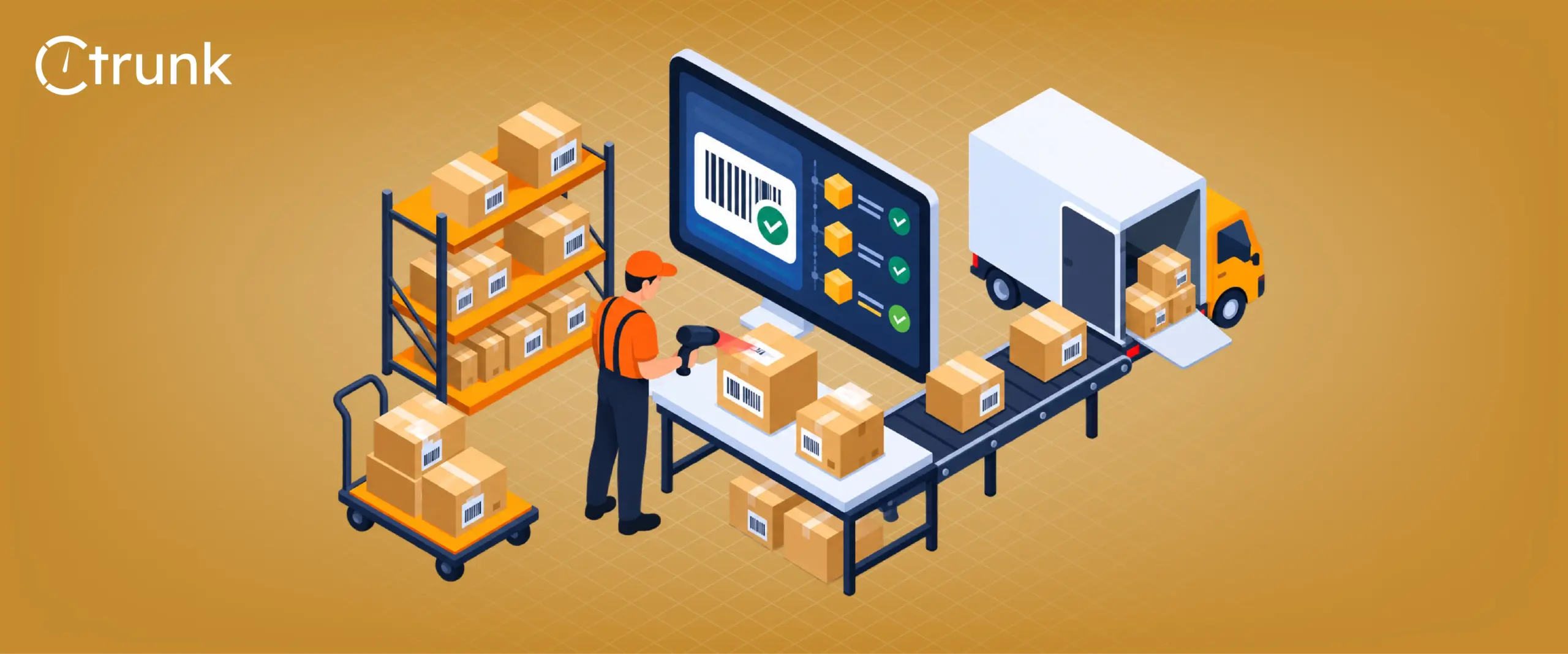
Barcode management involves a method for using codes that are machine-readable to track and identify shipments. A parcel is assigned an exclusive barcode whenever it is either booked or registered.
This barcode can be scanned at various points, such as playing a role in the following processes:
Every scan is documented in the system, in order for courier companies to know where the parcel is, its progress, and what steps are to be taken further.
This process is straightforward. The shipment is labelled with a barcode that can be read by a scanner or mobile device, facilitating retrieval of parcel information.
Instead of entering the shipment number or customer details each time, workers can simply scan the barcode, thus getting instant access to required information.
Speed is vital in the courier business. Manual data entry takes up precious time when many packages are involved.
By employing the barcode scanning technique, the details of shipments are received almost instantly. The workers can input the data once and carry out registration, sorting, dispatching, or tracking without having to input the same information multiple times.
This boosts the productivity of the workers and allows them to handle more packages within a short period.
A manual data entry process increases the risk of error. An incorrect shipment number, status, or duplicate entry can cause issues further down the track in the delivery process.
With barcode management, these risks are reduced since information is obtained using scanning. When connected to the courier management software, the data obtained by scanning is thus reflected in the relevant shipment record.
Thus, it assists in keeping the courier records more accurate.
It is important for customers to be informed of the whereabouts of their packages and the time of their delivery. This is equally important for courier companies to be knowledgeable of the status of their operations.
The employees working in courier companies will be able to find the current status of every shipment if they use barcode scanning technology.
Efficient tracking systems help businesses detect delays fast.
Manually sorting hundreds of parcels can become a daunting task, especially in busy warehouses or courier hubs.
With the help of barcode management, employees are able to quickly identify the relevant information and route shipments as per their delivery areas, service types, and destinations.
The right courier management software will allow users to take complete advantage of barcode data.
Delivery teams have to follow several processes according to shipments. Finding the details of the items through manual searches can create problems and obstacles in the delivery procedure.
Implementation of the barcode system helps the representatives of the delivery team to scan the packages and get instant information regarding the parcel’s status. After the delivery is completed, the status will be updated again.
In this way, the process is more organized from the moment a shipment has been dispatched up to the moment of delivery.
The first attempt to deliver a shipment often results in failure because sometimes the address is not correct or the receiver is not present at home.
Barcode tracking helps to ensure that each delivery can be scanned and the status declared as undeliverable immediately.
What is more, the special mechanism ensures that no manual input is needed for tracking supplied shipments, as re-routing takes place automatically.
When barcode technology combines with full courier management software, it becomes increasingly effective.
This software connects barcode scans with all courier processes, such as shipment booking, delivery handling, reporting, accounting, and customer communications.
For instance, after the parcel scan, its status can be updated automatically. But this information can also be useful for operational reports or for informing clients about the parcel status.
A courier management system can provide shipment data on a single platform. Staff can easily access parcel information like the shipment history and current delivery status.
This minimizes reliance on physical documents and files.
Barcode scanning yields important information about the flow of shipments. Managers may use these insights to track performance, discover bottlenecks, and enhance workflows.
In the long term, this information will help courier companies to locate the sources of delays and see how operations can be improved.
When selecting a courier management software, businesses should look beyond basic barcode scanning. The solution should support the complete courier workflow and provide useful features for daily operations.
Important capabilities may include:
A connected system can help courier companies manage operations more efficiently as shipment volumes increase.
Barcode management is more than simply scanning parcels. It creates a structured way to identify, track, and manage shipments throughout the courier lifecycle.
By reducing manual data entry, minimizing errors, improving tracking, speeding up sorting, and simplifying delivery updates, barcode technology can significantly improve courier operations.
When integrated with reliable courier management software, barcode management gives courier businesses better control over their shipments and operational data. For companies looking to improve efficiency and provide a smoother delivery experience, adopting barcode-enabled digital processes can be an important step toward smarter courier operations.